Why I'm done dwelling on diabetes
Our identity is the first to suffer the complications of diabetes. It changes how we see ourselves--normalcy and belonging grow distant. Limitations germinate quietly like mold beneath the occluded layers of personality we create every day in order to just survive. It's the hairline fracture in the foundation of who we are. The deeper it goes the worse it gets.
https://youtu.be/XHX2h8Pm9Ko
I started LivingVertical to share Project365--my goal was to change the story of diabetes and show that we don't have to accept the narrative of a predetermined outcome of victimhood. I still believe in that same message, but I don't think the best way to communicate it involves creating content about diabetes anymore. I'll always have diabetes and I'll always be happy to answer questions about my experience with it--if I can help, I will do so gladly. Where it's relevant, diabetes will still be visible but it's not going to be the focus of what LivingVertical is creating. It will always be in the picture but it won't be the focus. I believe it's more important to demonstrate that life with diabetes is about LIFE. This is the most powerful advocacy I can offer. It's also a choice I am making because I'm frankly tired of trying to pack my world into the topic of diabetes. I'd much prefer to make diabetes fit into the world I'm choosing to explore.

I'll explain.
I've always had a hard time gaining a foothold in the diabetes online community. I suspect that's because my approach has been to encourage people to detach their identity from their diagnosis--because that's what worked for me. It's a tough sell though. A diabetes-free mentality is why I never stopped to think that I couldn't climb mountains as a teenager. It's why I thought it was perfectly acceptable to spend a month hiking the Appalachian Trail and take on solo adventures without trepidation in college. It's why I've driven across North America more than a dozen times (half of them solo) and I don't fret about changing my lancets daily. I didn't have olympic athletes and professional spokespersons with diabetes to assure me that I could do anything. I didn't see myself as a diabetic who climbed or who hiked. I didn't see myself as a person with diabetes. My identity had ZERO inclusion of diabetes--so why wouldn't I be able to do anything I put my mind to?
I wasn't in denial about my diabetes--no more than I've been in denial about brushing my teeth daily. I just never placed that task inside of my identity. Diabetes was a task--one that I realized was incredibly significant. I detached from it emotionally and executed it to the best of my ability so that I could have the freedom to pursue what I loved. Others might call this unhealthy, compartmentalization or repression. I call it freedom through discipline. I have staked my life on this philosophy repeatedly in the mountains and elsewhere. It's not a perfect science but it's been able to give me a winning average. I believe that it's the greatest value I have been able to share here.
Why is this all written in the past tense?
Sometime in 2012 I found that I had to include diabetes in my identity in order to reach others living with diabetes. I had to create space for it where it none existed before. I became the "diabetic guy who climbs things". I'd introduce myself to people that way. It changed the way I saw myself. It changed the subtext of the story I told myself about who I was. It wasn't healthy--literally. I know that many people have found value and connection through an inclusion of diabetes as part of their identity--and I don't begrudge them.
For all the value, impact and success that came with my diabetes advocacy, my own independence from diabetes atrophied. Spending 7-12 hours a day for the last 5 years writing, filming, posting, blogging, emailing, pitching, podcasting, publishing--all through the lens of diabetes--multiplied the weight of diabetes in my life. I wasn't just living with it--I was living IN it.
So what's the point?
- First, protect your identity. Be someone outside of your diagnosis. Maybe the "person with diabetes vs diabetic" debate is asking the wrong question altogether. The terminology isn't the biggest concern--it's the inclusion of a malevolent entity in our self image that should raise red flags. Execute the physical tasks necessary for your body to gain independence on behalf of your mind.
- Second, I'm thankful I've had an opportunity to dig deeper into my diagnosis through my advocacy here. I'm not regretful about what it cost me. I've gained a different perspective on just about everything and that has enabled me to make some wonderful friends. That's what I consider you.
- Third, when you reach the last page in the chapter--start a new one. Don't keep rewriting the last paragraph for years until you wither in frustration. Find what excites and motivates you and go unapologetically towards it even when it seems impossible.
Photography and adventure will be the focus of LivingVertical content moving forward. I believe this is the greatest value I have to give--unpacking the tools that have given me my life back. I think this is less a change of priorities and more of a return to them. There's a reason LivingVertical doesn't have "diabetes" in the name. It never occurred to me to put diabetes in the name of my endeavor when I arrived on the scene 5 years ago because it wasn't meant to focus on the problem but rather the solution. Walk the walk--even if it interferes with talking the talk.
I'm grateful for your readership up till this point. I hope you'll join me for this next chapter. I suspect that many of you who actually read my posts all the way to the end aren't here because of factual information I share as much as my interpretation of what I see in the world around me. If that accurately describes you then it's a good bet you'll enjoy what comes next!
I want to thank specifically Blake McCord, Ashika Parsad, Sysy Morales, Maria Qadri, Fatima Shahzad, Ryan Little, Matt Spohn, Andres Arriaga, David DuChemin, Rob Muller, Tyler Smith, Joel Livesey, Mark Yaeger, Carter Clark, Christine Frost and Nate Duray for inspiring me to have the courage to return to a diabetes-free mentality. There are many others who have contributed to my liberation--knowing or otherwise. Far too many to list here--but these folks have listened and shared in the deliberative process over a long time and I want them to know how much I appreciate their example and wisdom.

Souvenirs from the road
In case my most recent posts about life on the road have been too dark or self indulgent here is something different. This post is a collection of photographs and frozen moments that I believe to be priceless. These are treasures that I was privileged to witness and collect along the way. I didn't set out looking for them, which makes their occurrence along my path a much greater of a gift.
As we drove countless miles across North America, many hours were spent listening to podcasts and music. Lilo became incredibly fond of John Prine's music--a fact that was a gift in itself--and this shared appreciation eased the tension of being strapped into a car seat on many a long day. One of his songs in particular really spoke to me as I've been thinking back on the incredible trove of experiential plunder that I gained from our year on the road. I'd love it if you'd let the music video below play while you look at the photos and read the captions in the remainder of this post. Incidentally, I have linked each photo with any blog posts or podcasts that give more detail about each moment--where relevant.
These photos are not the apex of my professional work, nor my personal work. They are flawed, imperfect and beautiful. If they develop holographic headstones in the future, I'd bet that you'd see some of these images as the ellipses punctuating the end of my days.
Memories, they can't be boughten
They can't be won at carnivals for free
Well it took me years to get those souvenirs...John Prine, "Souvenirs"


On to the next adventure. I'm thankful for those of you who follow, support and appreciate the work I do. The people who don't actually read these posts fully won't mind that I don't really care if they like my work or not--because it's not for them, it's for us.
Love it for what it is
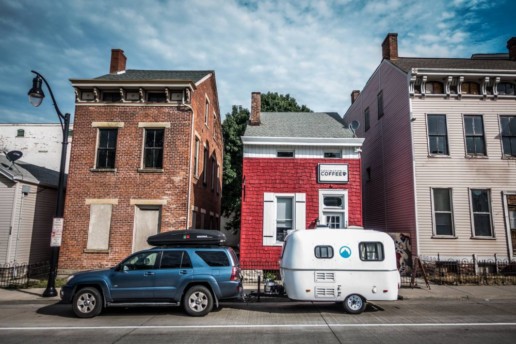
A little over a week ago I sat behind the wheel of my Toyota 4Runner watching the endless miles of red desert that border I-70 disappear behind our little 13 foot trailer. This our home--once our dream of freedom, now our albatross. Lightning flickered ahead in the distance and I braced for one last desert thunderstorm as we crossed from Utah into Colorado. I couldn't begin to guess when I'd be back out west of the Rocky Mountains to witness another one like it.
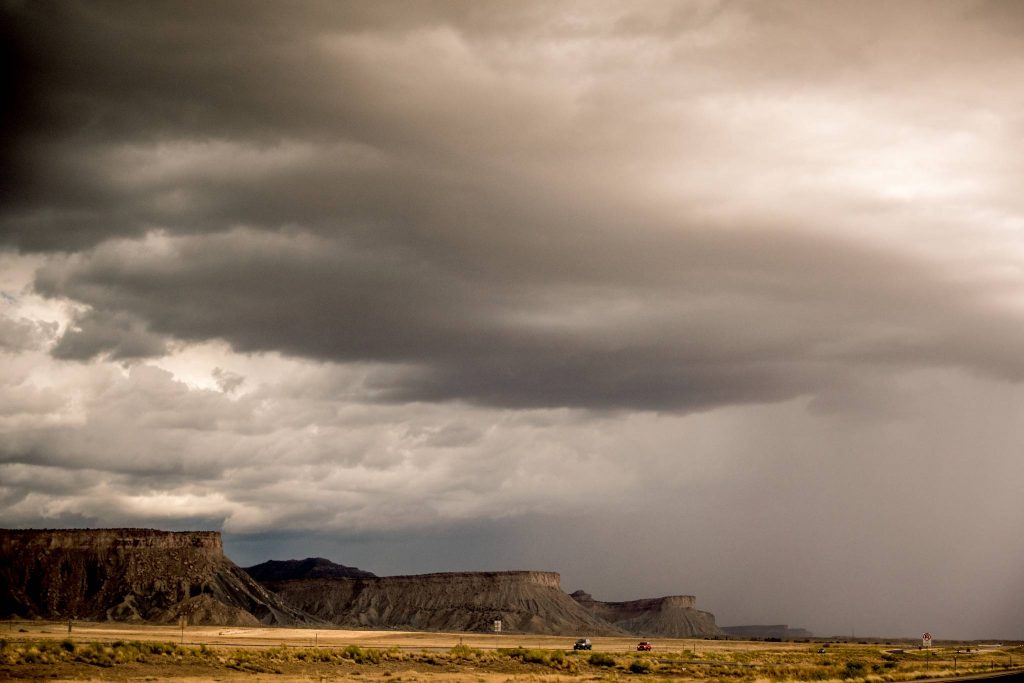
Today I'm literally right back where I started a year ago--in Massachusetts. Fewer dollars in my pocket--and fewer options to explore. It would be more cathartic to say that we went big and failed big--crashed and burned--but fizzled out is really more honest. The logistics of life on the road are all about trade-offs. Being able to negotiate those exchanges is a delicate process that requires a certain independence that we don't have. Financial independence was the main culprit, looking back. Also looking forward.
Making a living is nearly impossible without time, resources and focus to create something valuable. After struggling to make enough money to pay for the trailer, gas and pay for RV sites to park where some semblance of work could still happen--with power and wifi--I tired of the tail wagging the dog. We were running ourselves ragged trying to make the lifestyle work but it just wasn't giving back.
Instead of climbing, shooting photographs and hosting meetups I was doing cubicle style work to pay the bills at hot, gritty picnic tables where I couldn't even see my computer screen because of the suns glare. It took me twice as long (and was half as enjoyable) to do the same work. This struggle came to a crux at the realization that our sacrifices to live this way were not building LivingVertical into a more authentic message. Somewhere in southern Idaho I woke up one morning and realized that I suddenly wanted to have a home where I could print and hang my own photographs. I have a smartphone and computer filled with digital images that have never lived in the real world. I wanted to have a desk where I could sit and edit and record. I wanted a place where I belong. A place to adventure from and return to.
Adventure is great medicine when it helps you return home as a better person. Trailer life became the child-proof cap on the medicine bottle and when I finally got it open I found it had been empty all along. I had been cramming all of the worst parts of a 9-5 job into the worst parts of living like a transient. Climbing had become an afterthought, a distraction wedged in between worrying about paying the next months credit card and deciding how to go down the road another piece. This, I realized, was not the plan we had set out to execute.
It wasn't long after that that we decided to bail and start all over. Again.
Another cross-country retreat. Another series of blogs and Facebook posts trying to explain how and why failure set in again when I don't even have answers for myself. I guess the simplest explanation for this repeated pattern is the fact that we tried--again. Failure is always the risk of trying and we knew this from the beginning.
Now I'm sitting in my mother-in-laws kitchen in the Boston suburbs which we are calling home for the foreseeable future. It's a bit comical to be writing about potential next steps in my life at this point. I've become a millennial caricature. I'm 34 with a child, trying to set the world on fire from my smartphone--but I'm incrementally selling off my camera gear on eBay to keep that work (and my family) alive. I don't know how to make ends meet and do the work that matters--the work that started all of this off in the first place.
Despite my choice not to sugarcoat the consequences of my situation I'm not despondent. The trailer has sold of course--and I'm playing hangman with the remnants of my future. I got some good advice about my situation from a good friend as we drove east: "Love it for what it is, don't hate it for what it's not".
The choice to try something I'd dreamed about for years was still a good one. It's a choice I'm thankful I had the opportunity to make. I still don't know where it will lead me and what it has taught me--those are longer term investments that may take some time to mature. Being broke and out of options isn't too far from being hungry and focused depending on how you look at it--and that's how I'm choosing to look at it.
Full-time life on the road was an amazing experience. Seeing incredible places with my family--watching Lilo grow and adapt through that journey has been a wild ride. I've gotten more time with her than most parents get and that is worth all of the hassle and uncertainty that has come with it. I haven't soured on adventure--I am learning to grow with it and live with the changes of life. There was a time in my life when living in the dirt was a great adventure that enabled me to do good work that mattered. Trying to go back down that road 5 years later is much different--and now it's a vexing dead end. Adventure today isn't adventure yesterday--and it wouldn't be adventurous if it was.
We don't need no inspiration
One only needs to do a quick glance at social media to see that there is no shortage of people creating inspiring work and sharing inspiring stories. So what's missing? In the few years since I started LivingVertical the once sparsely populated landscape has grown a little crowded. Don't believe me? Go on Instagram and look at the #type1diabetes hashtag. Sure, there's still some okra water, cinnamon pills and some "woe" boaters floating about on that sea of virtual humanity--but my goal was never to eliminate those perspectives--merely to offer an alternative alongside them. Technology has allowed this community to grow to the point where I no longer feel like an outsider as an active and unrepentant type 1. I'm really thankful for that.
The question that I keep coming back to is what still is missing from the equation--because inspiration abounds and the net reality of life with type 1 diabetes seems largely unchanged for it.
I'm not waving a white flag--but trying to look critically at the premise of most of my work: we need stories and inspiration to change the narrative surrounding life with a chronic illness. Maybe I've been looking at it all wrong. It's only taken me 5 years to start figuring out what I'm doing here so it's good to have a jump start on the whole process.
Inspiration doesn't change lives. Initiative does. Action that overcomes the inertia--the paralysis of the static life. Climbing is how I connect to that. It's North on my compass and from climbing has come many other levers that I've used to keep from slowing down. Photography. Writing. Creating. Noticing. The make and model of the compass are not nearly as important as having your own idea of North and taking steps to navigate on a journey. The goal is not to possess a perfect, flawless compass that can be listed on eBay at the end of its service as "new or like new condition".
Inspiration is a by product of something that does change lives--and that's the simple act of showing up and doing the work. It's important not to confuse the two. Choosing to see the creative choice in our lives directly opposes destructive force in our lives. This is nothing short of transformational if we take the step to go beyond how we feel about doing the work and simply do the work. This means trying with no regard or concern for failure. Uncertainty is the space we need to occupy with pride. It's not safe and certainly not neat. Inspiration is not the foundation for change. It's the antecedent. It comes after making the change and doing the hard part.
We don't need inspiration to get started or show up consistently. We just need to get started and show up consistently.
Adjusting expectations
The stories we tell ourselves determine what we create from our objective reality. For example: the fact that I have diabetes is objective--not a matter of perception or interpretation. On the other hand, bringing diabetes into wild places and choosing to manage that risk on offense rather than defense--that's very much about interpretation. That's the result of a story. The narrative we feed ourselves daily sets our expectations. Adventure is embracing scenarios that force us to have our expectations challenged. Adventure isn't climbing as such. That's why I maintain that the AdventureRx isn't just for people who climb or people with diabetes. It's for people. I happen to have diabetes and that's been a massive driver of my expectations and climbing has been an arena that has forced me to let go of those preconceptions.
Still, it's all an exercise. It's all transferrable. It's not unique.
I've seen the same concepts play out in my pursuit of photography. In parenting. In traveling. In business.
Don't let the wrapping fool you. It's really pretty basic and woven into the most mundane facets of life. I'm not suggesting that adventure is boring or pedestrian--rather I believe that much of the entire world which we are told is mundane--contains vast amounts of fresh territory to explore for those who recognize that we all have expectations and that we all need to embrace discomfort on a regular basis to avoid stagnation.
Physically, artistically, emotionally--comfort is where progress goes to die.
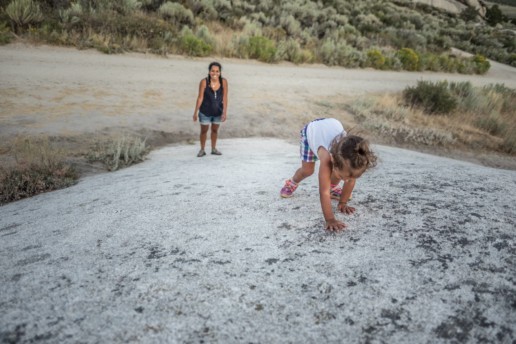
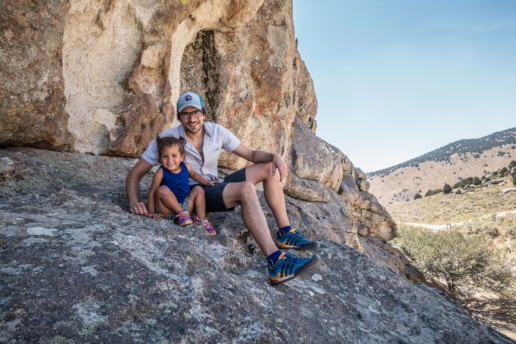
Practically speaking, this train of thought has grown from my recent approach to climbing being disrupted by my two year old daughter. It's discomfort--in a very different package. I know some people can't imagine what could be hard about only climbing a couple of 5.6 pitches and calling it a day. Ambition chafes a lot less when you indulge it. When that's not an option it becomes a thorn in the flesh. I'm not used to being out climbing and having to be dad first.
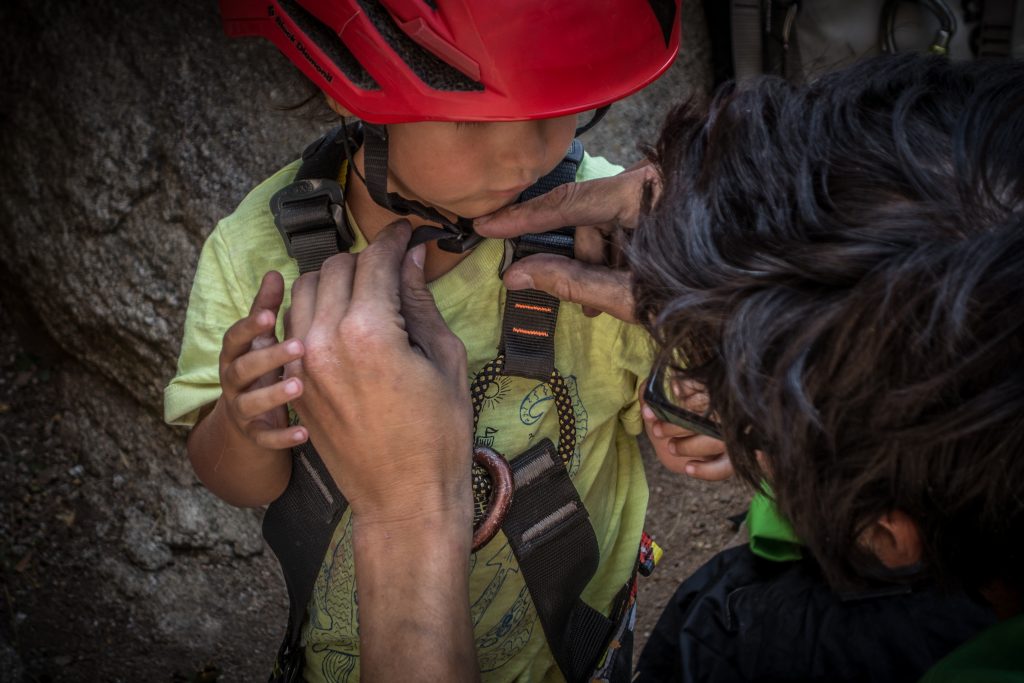
I finally decided to give in and adjust my expectations. I chose a different narrative for this time on our journey--one in which these days are not about being a climber--they are about being a dad. No more torturing myself about what I should be climbing. I'll have days to be a climber and push myself again. It's worth it to pause and see my two year old daughter summit a climb that for her is basically El Capitan. Changing my story altered my expectations and opened my eyes to see Lilo make massive leaps in her climbing--negotiating tricky and unfamiliar terrain with growing confidence. It's been a valuable reminder of the fact that climbing isn't always about the climbing. It's about the ways in which discomfort is the lever that forces much needed change into our story.
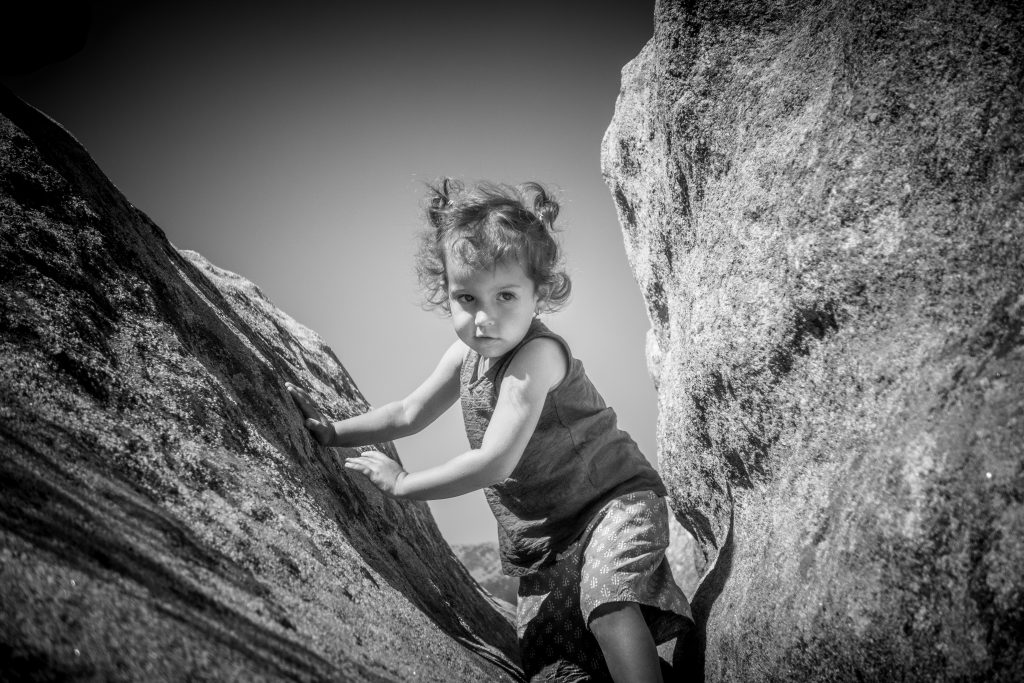
Climbing is an exercise in eschewing the comfort our expectations--not strictly a quest for the glory of achievement. That's the story I've chosen to tell myself.
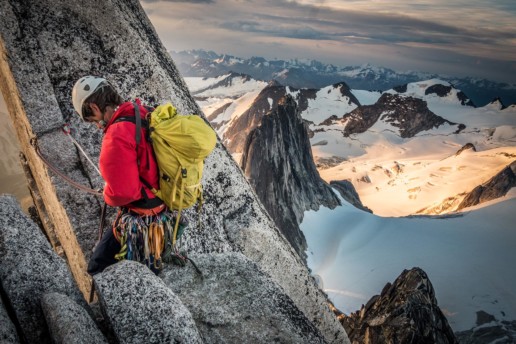
Photos from the Northeast Ridge of Bugaboo Spire
I'm not going to try and post all of my photos from the Northeast Ridge of Bugaboo Spire here because that would leave us both with an improbable task; me of uploading and organizing everything and you of taking the time to go through them all! Nevertheless, the task of returning with images to share lies at the heart of adventure. It's not about having "fun" as such--nor is it about some existential quest that takes place in a vacuum. Certainly those elements arise in the process, but the result of it all boils down to something we create. That's our story and the photographs are an important part of it.
I am writing an eBook about this trip called "5 Minutes of Chaos that Changed my Life" and making a short film from it as well. Both will dig deeper in to the nitty and the gritty of that experience. I feel thankful to have had an experience so rich that I am left grappling to get my arms around it. If you would like to buy prints of these photos, please visit my print store. If you don't see the image you want, please contact me and I will make sure that it's available for you. Each photo print we sell supports the work we are doing to change the story of life with type 1 diabetes.


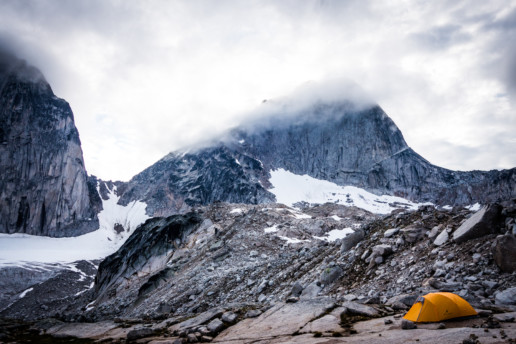
5 Minutes of Chaos that Changed My Life
I started writing a blog post and it turned into my next eBook AVAILABLE NOW "5 Minutes of Chaos that Changed My Life". There's a lot more to this story than what I've discussed on recent YouTube videos and Podcasts but I don't want to cram it into a blog post that won't get fully read and besides...I hate rushing. That said, the real nugget of gold that changed my life is what I'd like to focus on. It's not about climbing. It's not even about risk management or diabetes. Simply put, it's about the story that we all tell ourselves. Here's an excerpt from the book:
As the dim pink glow of the infant sunrise bled across the horizon I felt heart drop into my stomach. "Hey Martin, hold up?" I croaked at my partner. He was grinding up the still frozen snow slope towards the several hundreds of feet of unroped "approach climbing" that intervened between us and the start of the route we'd come to climb. The familiar feeling of low blood sugar stifled the words in my mouth as I attempted to explain to Martin that I had to take some food and rest.
The day prior--lugging a 45 lb pound pack up 5 hours of steep trail before making high camp at Applebee Dome in the Bugaboo mountains I had gotten by with eating almost nothing more than a few handfuls of Brazil nuts. We had a short weather window to approach and climb the massive Bugaboo Spire via it's Northeast Ridge--a classic climb that is not technically hard but is deceptively big. Speed is safety in the mountains where the grade of the moves are of less importance than the fickle weather which turns on a dime and can transform idyllic summits into lightning rods.
"I hate rushing. That's the only thing that makes a 2:30 AM start worthwhile" I thought as we trudged out of camp earlier that morning in the pitch black. Now I was looking at our time advantage evaporating as I checked my CGM like a nervous tic. I knew my blood sugar would come up but I also knew that the cold would slow my digestion. "We might be here a while. Are you sure this is a good idea to keep going?" I don't like starting a big day in the mountains on a low. Martin just nodded back quietly as we sat watching the dawn break over the horizon. The little pinholes of light creeping through the darkness across the glacier dimmed in the twilight and revealed themselves to be other climbing parties who eventually passed us as we sat.
Sometimes you can do everything right and still lose out.
Objective reality is that I am a type 1 diabetic. I can't change that. The story I tell myself about how type 1 diabetes impacts me, limits me or motivates me--that creates and shapes my reality. That is fully in my control. We tend to think of our story as a result of our reality or circumstances--not the other way around. We often see people getting irritated by the narrative that the public has about type 1 diabetes. It certainly can be frustrating but it's a lot less of a concern when we have fully engaged with the power that we each have to tell our own story rather than live in the shadow of someone else's. It doesn't matter if other people believe it--we tell it to ourselves so that we believe it and then we live it out in reality.
This concept really hit home while climbing in Canada with Martin--and that's what the eBook will really dig into--as well as the short film I am working on about our time in the Bugaboos. Remember that our Patreon supporters will have free access to this (and all future) eBooks I write as well as early access to the film as it goes through the various phases of production! Subscribing to our email list is a simple way to make sure you don't miss anything and stay up to date with our publishing and production.
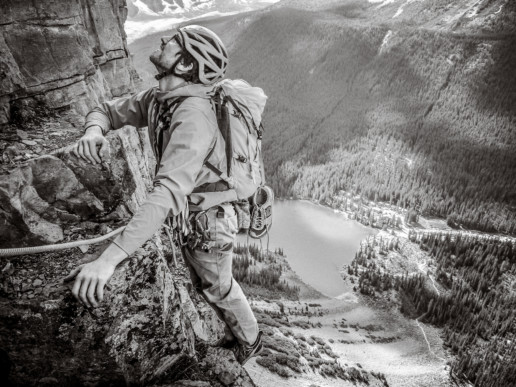
Food for the mountains and photos from the Tower of Babel
I wanted to put together a few of my favorite photos from the Tower of Babel because with so much media created it's not hard to lose a lot in the shuffle of moving on to the next thing! This is a short post and by the time you're reading it I'll be on my way into the backcountry for another adventure in the mountains--this time the Bugaboos! Martin and I are going for a larger objective than the Tower of Babel--the Northeast Ridge of Bugaboo Spire--which is beautiful and quite a long day. It will surely test our ability to move efficiently and cover a lot of ground.
Today we are packing up and gathering food--laying plans and tactics for the coming days. It's exciting to be returning to the Bugaboos (which I haven't visited since Project365 in 2012) but it's also a little nerve wracking because once you're out there--you're out there and it's too late to pick up that one last item you left back at the trailer!
- My breakfasts: a few spoonfuls of my peanut butter-sunflower seed and hemp seeds concoction, along with bulletproof tea (coconut oil with tea) and some cheese.
- Snacks/Lunch: cheese and salami, Brazil nuts, jerky.
- Dinner: Boullion soup, coconut oil, greens, cheese and tuna fish.
- Glucagon, Clif bars, shot bloks and dark chocolate for emergencies/low BGs
I hope to be back out of the wilderness and reconnected by early next week with lots more photos and video to share. In the meantime, I hope some of these photos inspire you to get out and find some adventure of your own. There's a lot out there and it belongs to us all.
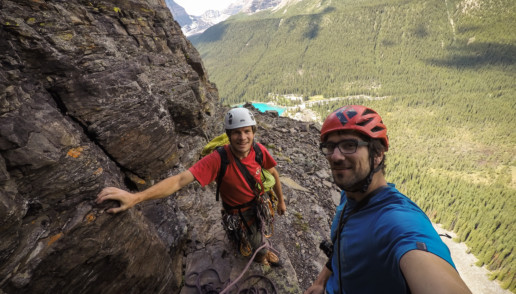
Dance with the fear: Tower of Babel trip report
I feel as though I've been given a gift that is so precious that I don't deserve it. I almost feel guilty being able to experience these moments on the edge of my comfort in some of the most spectacular places on the planet. It's not just being there that is so meaningful it's the price we pay to dance with the fear. The people that we encounter on this hard road to nowhere become friends and mentors. The price is high but fair.
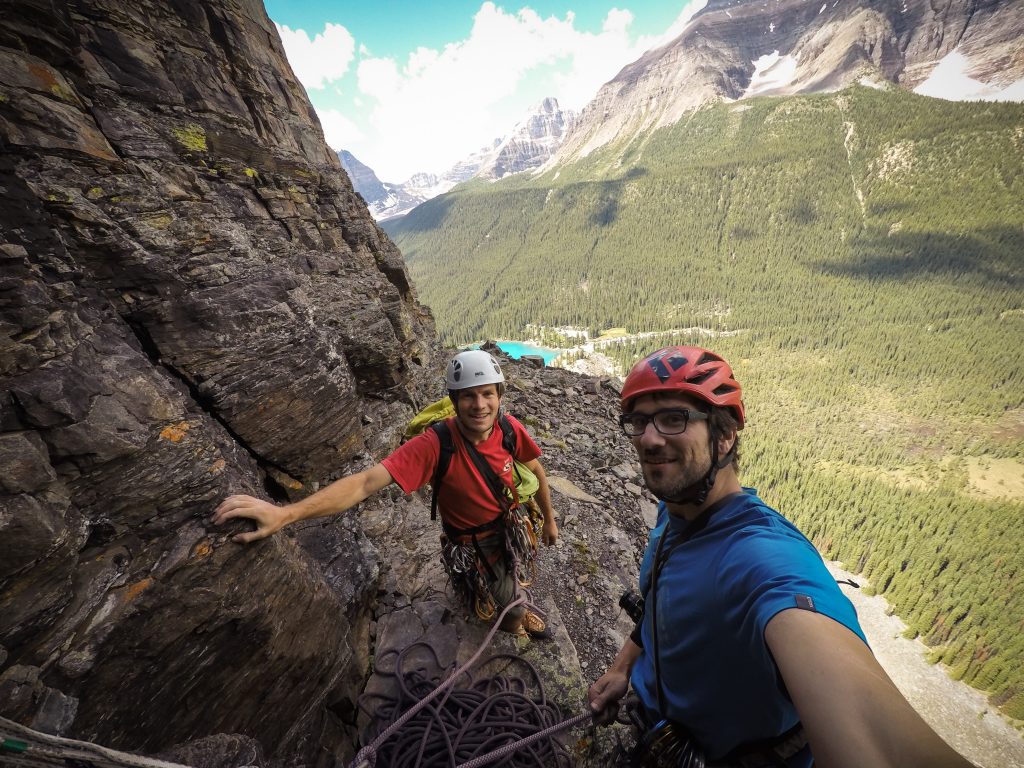
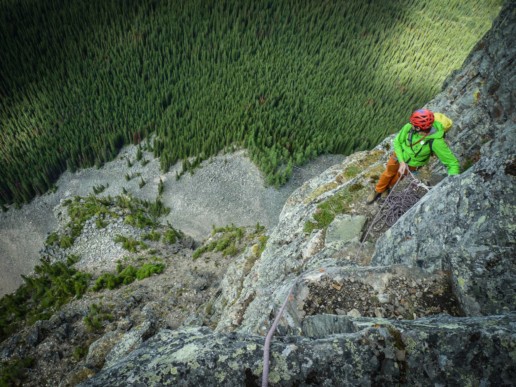
I set out to climb Tower of Babel in Banff National Park (near Lake Louise in Alberta) with Martin Fuhrer--a good friend and Type 1 companion since Project365 serendipitously brought us together. His father, Hans, who is now 80 had climbed this same formation many years ago and he recommended it highly. As a lifelong climber and former head of SAR (search and rescue) for Parks Canada, his suggestions always carry significant merit because many of todays classics were pioneered by Hans and his friends in the 60s and 70s--and he has many unrepeated first ascents in the backcountry that are staggering feats of effort even by modern standards.
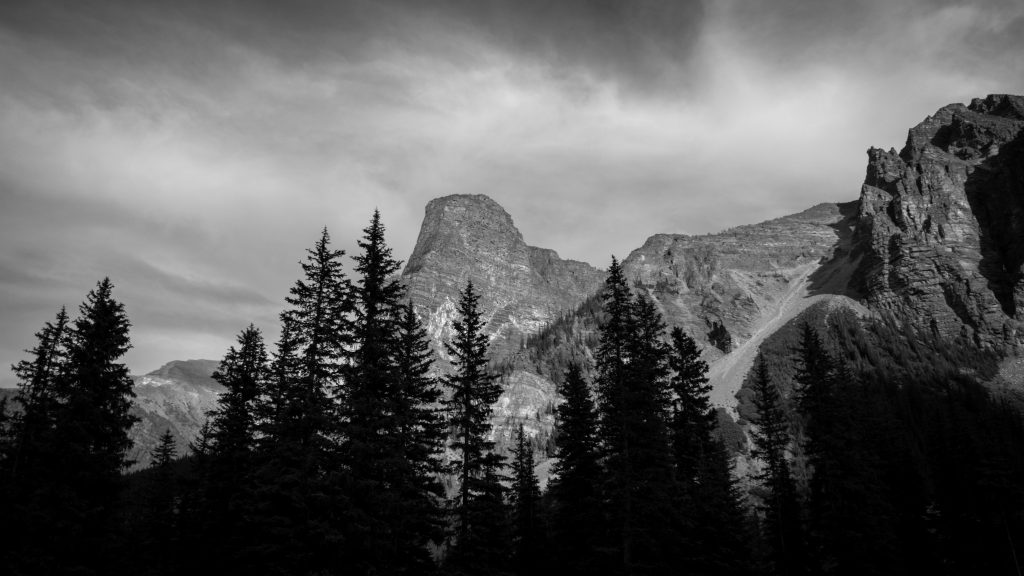
Waking up at 4 AM is never something I enjoy. "It will be worth it" I keep telling myself as I stagger around trying to get some semblance of breakfast together that will be fast, easy and compatible with my Ketogenic diet. A quick blood sugar check and I can see that I'm already off to a sub-optimal start. I'm higher than I want to be on waking (150) so I trim the meal to the bare essentials and take one unit of rapid acting insulin which will hopefully have left my system before we start the uphill grind to the base of the tower. Peppermint tea with coconut oil, cheese, almond butter and hemp seeds are my rations. I pack some eggs and more cheese for later on the climb, along with some Brazil nuts--which will ultimately stay in my pack for the entire day without being eaten.
A two hour drive puts us in the heart of Banff and we begin the approach. My blood sugar is still high (178) but I don't really care--it will come down soon enough and I'd prefer a little cushion with the steep hike ahead that will ultimately deposit us at the base of the 1,250 tower. Trying to describe a day of climbing is hard--and possibly not worth my time or yours beyond a certain point.
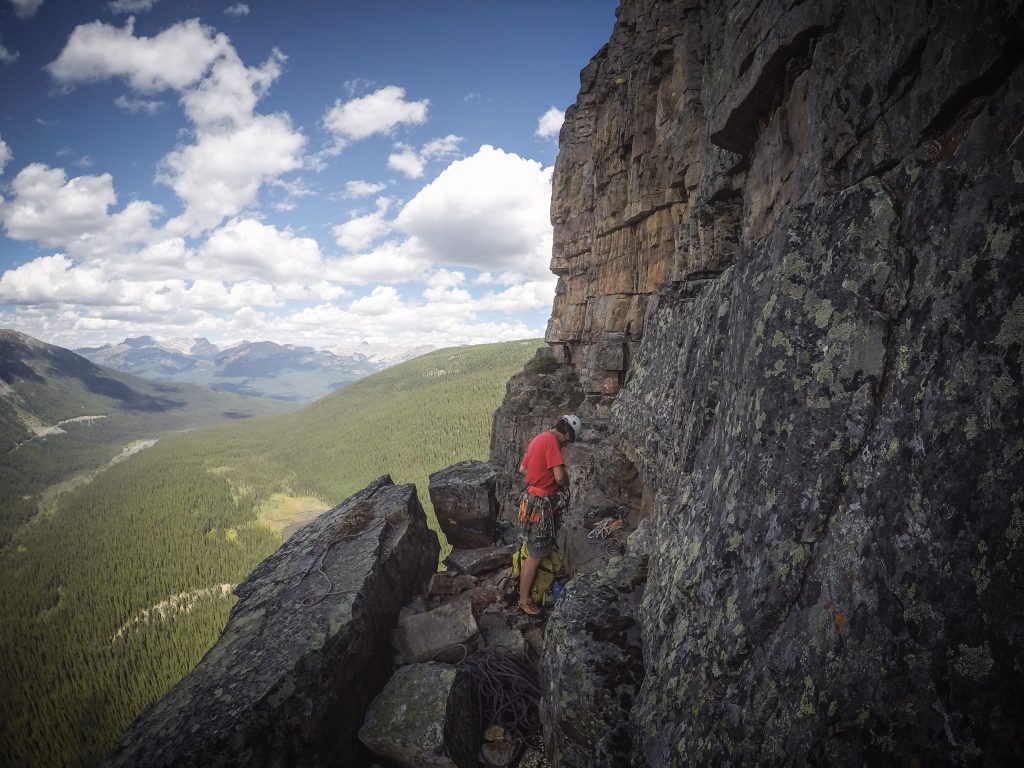
It was hard at first and then it became easy. I think that's the heart of the matter--which is worth literally ALL of my time. Doing hard things is how we make them normal. Normal becomes easy and our limits shift. I keep thinking about this on the wall as I look repeatedly at my CGM watching my blood sugar--concerned about a shift or a drop that ultimately never comes. I wonder what it would be like to live without that concern, that fear. It's with me everywhere I go.
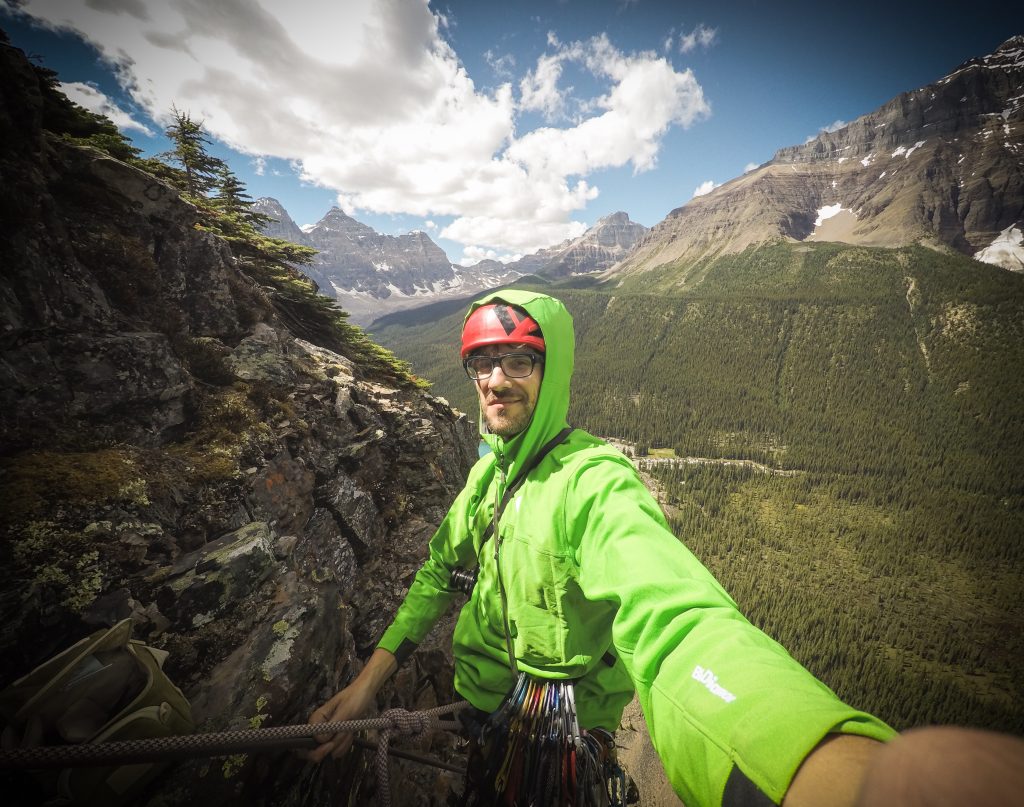
The illusion that I've transcended that fear because I choose to dance with it in the mountains sets my teeth on edge. I've read some misinformed bloggers who think that my climbing is about demonstrating conquest. In truth it's about the ritual of confronting my weakest self and watching the myth of conquest evaporate like morning mist. Here on the side of a cliff my fear is nearer and more present than ever. I hear it on the wind and it whispers worst-case what-ifs in my ear. The day that I conquer my fear is the day I will have no more use for climbing. I have no concerns about such a day ever arriving.
From the dance with fear comes joy. The gift. This is real--as real as high blood sugar. As real as the fear.
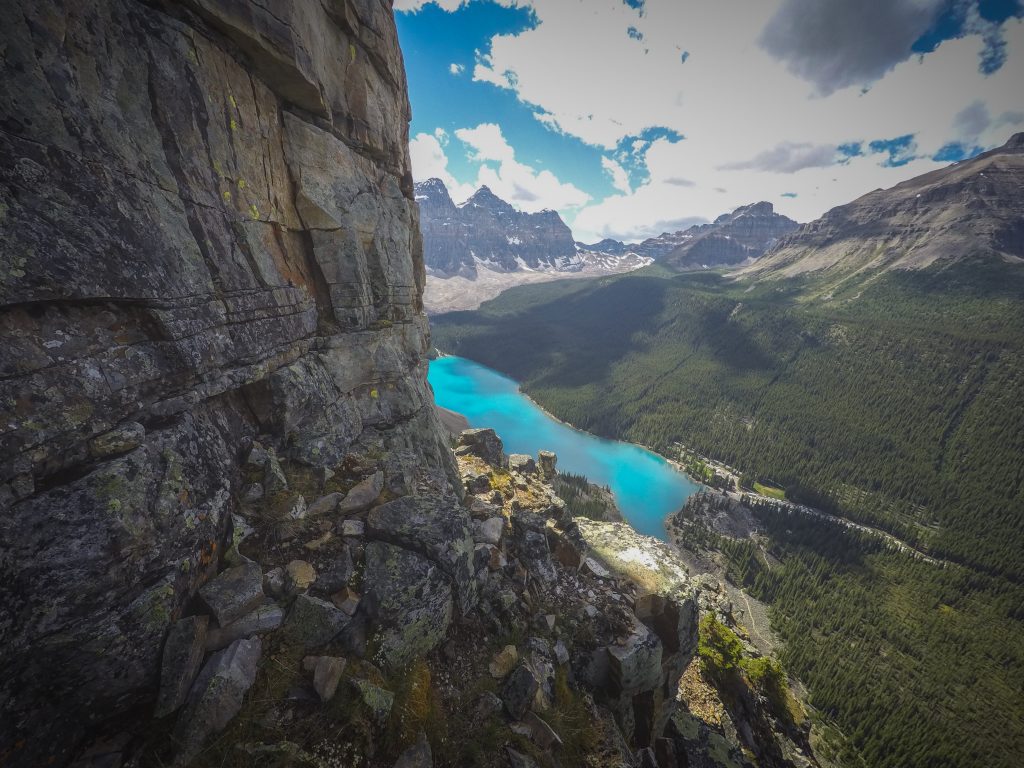
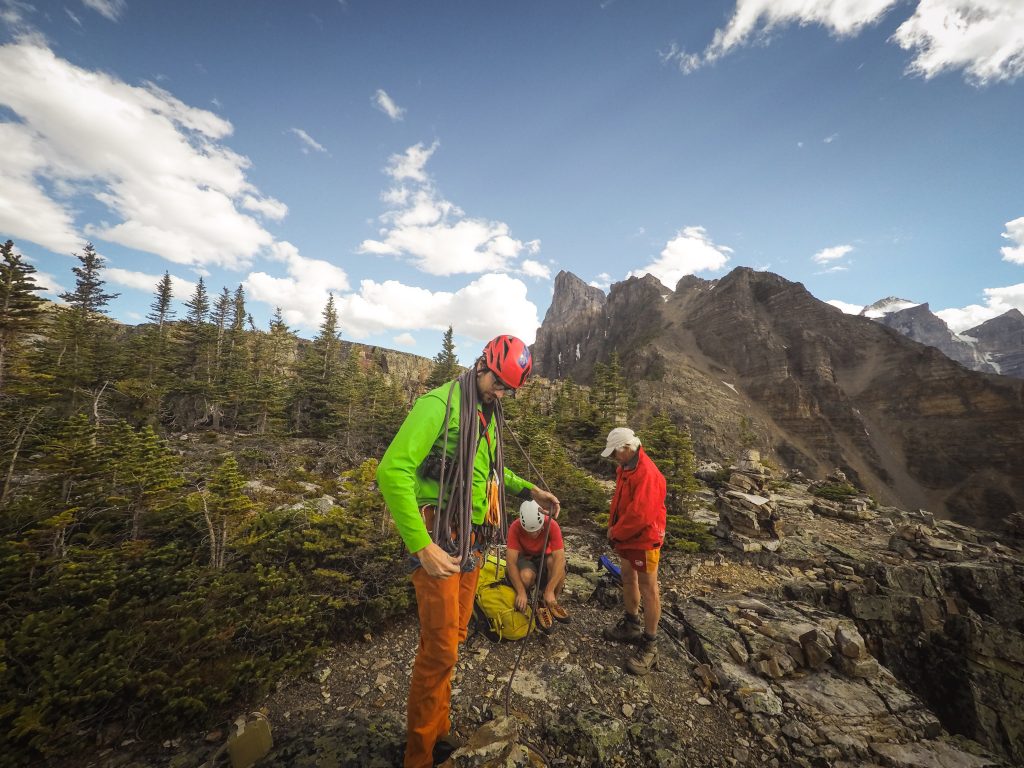
We push through to the summit and find Hans waiting for us--he hiked up a grueling gully to meet and congratulate us. We share details and memories of the climb in the way climbers do. I feel so much joy at the completion of the ascent, our ability to bring type 1 diabetes into the vertical world and our escort down the mountain. I joke with Hans that it's not often one gets escorted off a mountain by the (former) head of SAR under such pleasant circumstances. His laughter drifts back over his shoulder as he is already out and away down the trail, ahead of Martin and I.
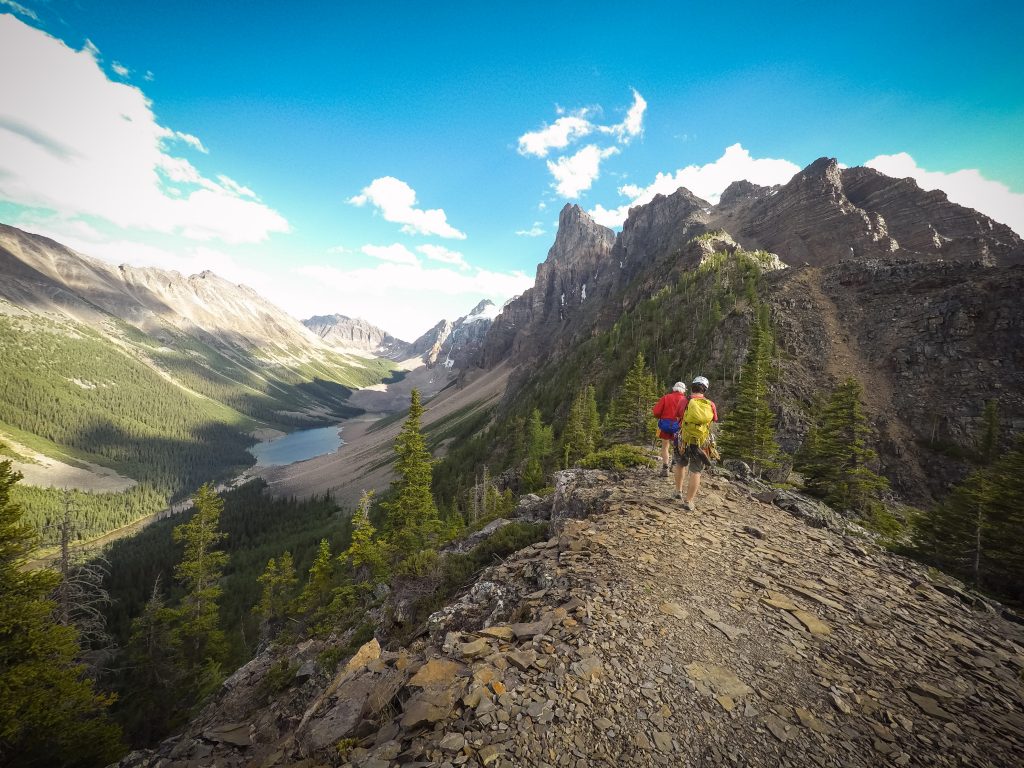
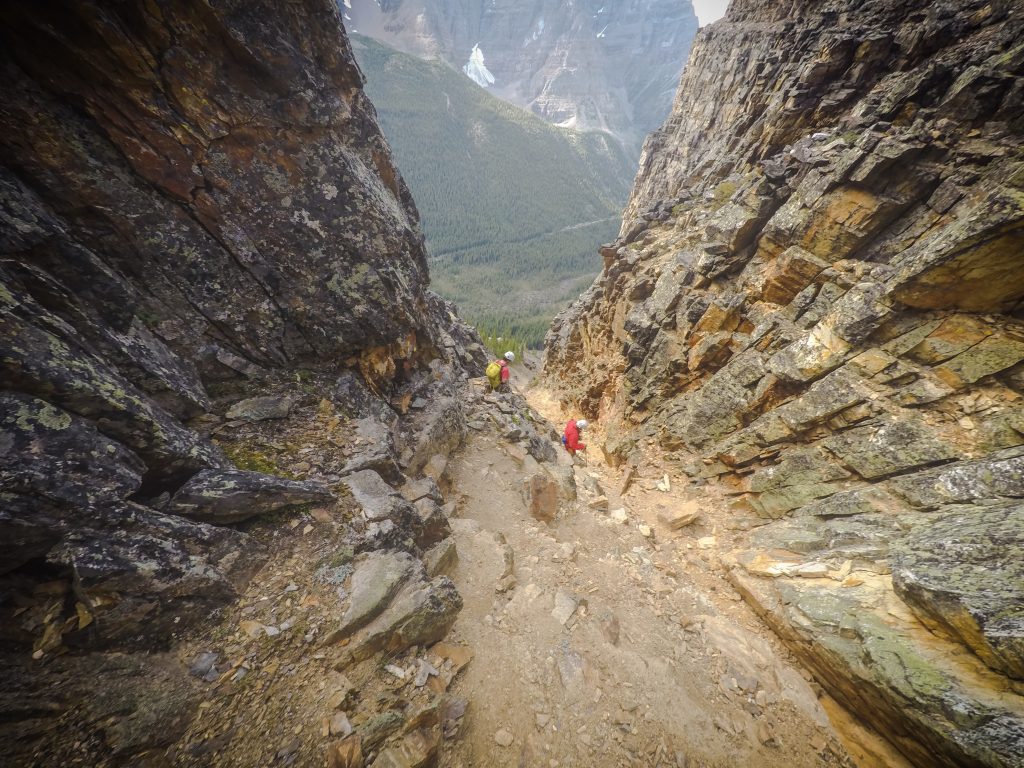
I hope that I can find that much joy and strength in the mountains when I too am 80 years old.
Crowdfunding: a frank discussion
LivingVertical isn't for everyone. It's for YOU. That's why I am asking you for the opportunity to make this mission, this message my full-time priority by pledging support for our work via our recently launched Patreon campaign. It's loaded with exclusive rewards which you can see for yourself, including our first foray into print media--The AdventureRx Journal.
Over the past few years you've watched me attempt to juggle the disparate goals of supporting a family and creating revolutionary adventure media that can overthrow the limitations of type 1 diabetes.
I've decided to stop juggling.
I've committed to LivingVertical full time. That means sink or swim--a test that I've been able to protect LivingVertical from for years. I've worked many different jobs to support this effort myself and I don't regret keeping it on life support in order to get back to this point of giving it my full time focus. Now, the question is 'How long can I afford to maintain this commitment while supporting my family?'.
When I first began working to create empowering adventure films, blogs and photos in 2011 I had a sort of luxury of being free to live in the dirt. Literally. I took great pride in doing more with less. It felt rebellious to start taking a stand without asking for "permission" from corporate sponsors. Having basically no overhead made us hard to squash--like post apocalyptic cockroaches. I never anticipated success. When Project365 was completed there was too much momentum to just walk away from LivingVertical--but no pathway for sustaining a living from it either. I assumed that if LivingVertical was good enough some company would sweep me off my feet and give us the financial support required to ride off into the sunset creating inspiration and empowerment for the world at no cost.
I often have been told that "It would be great if (insert drug/device company name here) sponsored you! Seems like you would be a great fit. Have you ever looked into that?" I have had some great relationships with sponsors in the past--but we never rode off together into the sunset. Short term engagements left me searching for ways to attract the next short term engagements. My focus couldn't be the work and the message. The message mattered to me and my audience--but it wasn't what was supporting me financially.
The reason I am attempting to crowd-fund the backbone of our support is because I want to change that. I believe that my audience and the message come first. Having audience support is what allows that freedom to exist.
No one is entitled to having an audience, let alone support from that audience. The fact that you're here with me means that I've been given a wonderful gift already. I have no intention of putting my work behind a wall and making it pay-to-play. I'm asking you for the opportunity to make the free, public work of LivingVertical bigger, better and more impactful.
